Let me start this review by saying I’m not someone who usually gravitates toward roguelites, with the exception of Balatro. Most of the time, I find the genre more frustrating than enjoyable. I’m constantly being sent back to square one due to a small mistake, which sometimes is something completely out of my control. This rarely provides a satisfying gameplay loop for me.
I went into The Rogue Prince of Persia from Evil Empire, the studio behind Brotato and post-launch Dead Cells, with that mindset, but somewhere around the 6-hour mark, something clicked. I found myself not just playing to get enough experience to write this review, but actually wanting to keep going.
That excitement to keep playing came from prolonged exposure to the game’s strengths. The level design, platforming, and especially the soundtrack, are the best parts of the package, and they do a lot of heavy lifting. Honestly, they more than make up for the basic combat and the minor performance issues I ran into while playing on the Nintendo Switch 2.
One would not be blamed if they thought The Rogue Prince was or is tied to Prince of Persia: The Lost Crown, since the games were released just four months apart. So I want to reassure everyone that The Rouge Prince is, in fact, a standalone experience and does not need any context from Ubisoft Montpellier’s game. Or really any of the prior Prince of Persia games, for that matter.
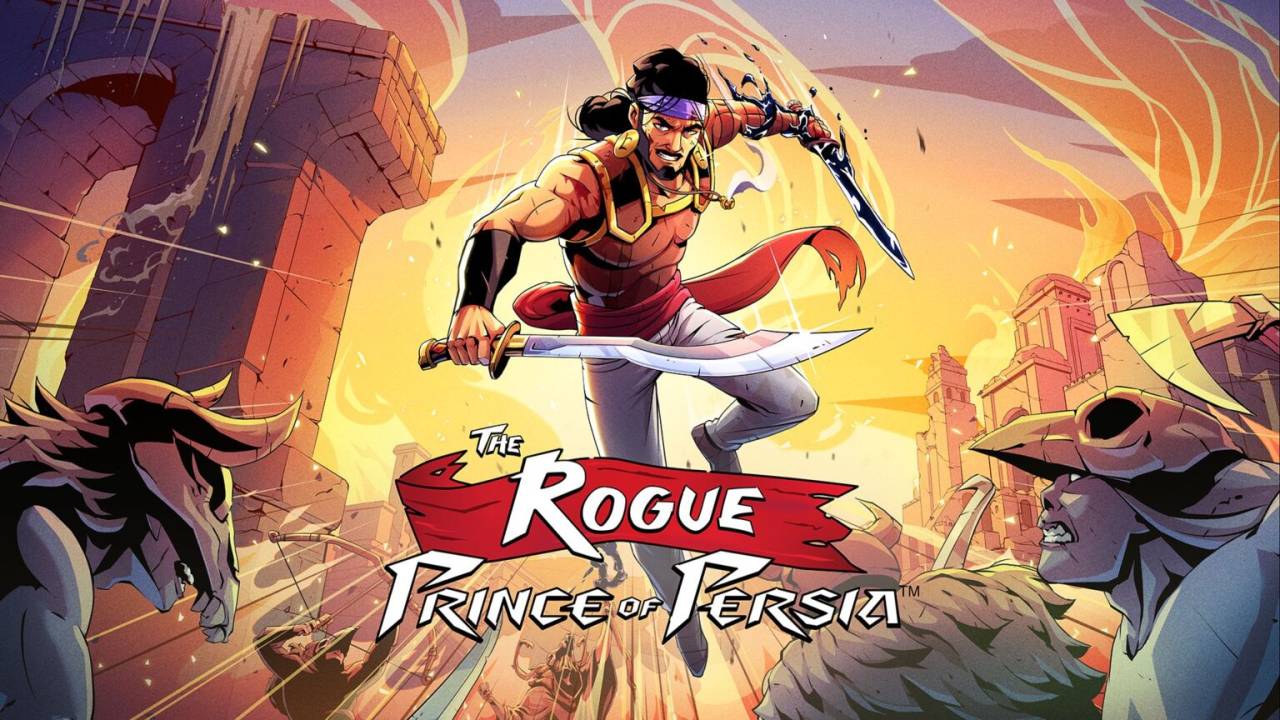
The story itself is pretty straightforward. You play as the Prince, who is killed early on by King Nogaï as the Huns attack his kingdom. He then wakes up in the Oasis, which works as the hub area throughout the rest of the game. You meet a character named Paachi, who explains that his pendant allows the Prince to come back to life at the last place he rested.
That’s how the roguelite loop is introduced, and from there you’ll keep returning to the Oasis to spend resources, unlock new gear, and upgrade your skill tree before heading back out. Throughout your runs, you are looking for and trying to save members of your family as well as take back your kingdom from the man who originally took you down. The titular rogue Prince is animated with a lot of personality that makes up for some of the average writing.
There are five total bosses that all need to be beaten to progress the story, but if you just perform a straightforward run, you will only encounter three fights that occur after clearing the second, fifth, and seventh stages. These battles are intense and demand both skill and quick attack-pattern-recognition. Each boss stands out not only in design but also in combat style, requiring different strategies and mechanics to defeat. For instance, the first boss players face is General Berude, a large, ram-like humanoid creature. He relies on charge, leap, and ground-pounding attacks within a confined arena, where the only aid for repositioning is a wall that gradually closes in as the fight progresses.
Where the game really shines is in movement and exploration. As expected from Evil Empire, the platforming feels smooth and responsive, and the levels are clearly designed with that in mind. While each level generally follows a consistent layout, because of key story elements like jail cells and NPCs who provide important quest items, the details within them change from run to run. Item placements, chests, enemies, and doors are randomized, and if you’re lucky, you may even find a level event that triggers randomly at the beginning of an area that can lead to some great rewards.
Navigating through platforming puzzles and finding hidden paths is consistently fun. The soundtrack from Persian-American artist ASADI deserves a lot of credit as it adds a ton of energy to the game and keeps the pacing feeling intense.
The combat is serviceable but pretty simple. You’ve got a primary weapon for melee, a secondary tool for ranged or AoE (Area of Effect) damage, and a dodge that helps you reposition or escape danger. Throughout your runs, you can also find medallions, which are items that modify your stats or grant you special abilities during that life. There are a ton of new unlockable weapons, tools, and medallions that can be purchased using resources at the Oasis, which is a nice touch, but ultimately feels more like padding to the game rather than something that makes the gameplay feel new.
The skill tree is fine, and it gives you a goal to work toward. However, the upgrades are mostly incremental stat boosts and don’t feel impactful enough to really change how you play. I ended up settling into a more tanky build that worked well after starting with a build that provided me with as many resources as possible to start my runs, though it didn’t feel like I was experimenting when making changes, just optimizing what already worked.
Performance on the Nintendo Switch 2 is nothing to write home about. In both handheld and docked modes, and for a game with a relatively small file size of around 1.6 GB and fairly modest visuals, I was a bit surprised by some long loading times and occasional lag during more chaotic fights. It’s not game-breaking, but it is noticeable and a little frustrating, especially during intense moments that could end your run.
At the end of the day, The Rogue Prince of Persia is just ok. There is a fun game in here with some things to like, especially the soundtrack, movement, and level design, but it’s held back by repetitive combat, underwhelming progression, and some technical hiccups. For every Switch 2 owner who is interested in giving this a try, the game is out now both digitally and physically.
