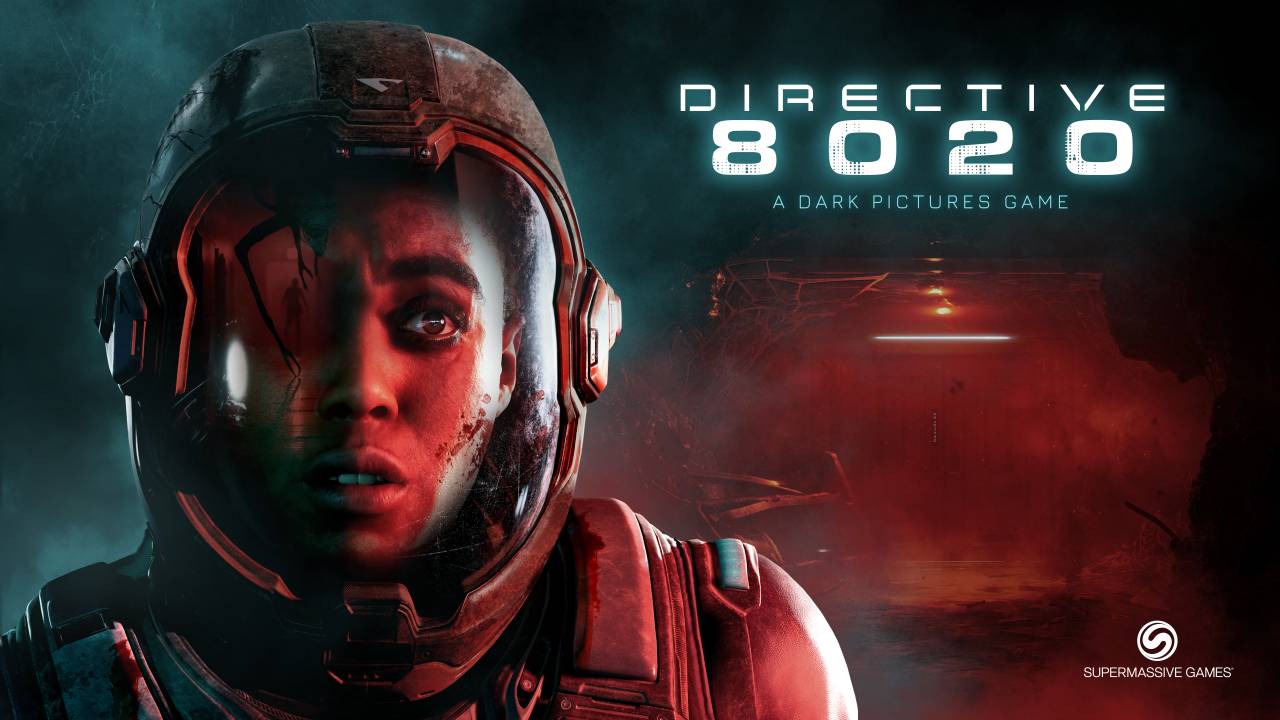
Over the last decade, the team at Supermassive Games has really carved out a unique niche for itself. Since the success of the PlayStation exclusive Until Dawn, Supermassive has been working on the Dark Pictures series, an anthology of horror games with the occasional celebrity role and multiple endings based on player choice. Directive 8020 is no exception to that formula. With a cast headed by Lashana Lynch (No Time to Die) and a healthy amount of quick time events deciding characters’ deaths in the blink of an eye, Directive 8020 is a Supermassive game through and through. However, this time, it’s set in the empty vacuum of space, where no one can hear you scream.
Directive 8020 takes a lot of inspiration from sci-fi classics like Alien. In fact, the game starts in a very similar manner to Ridley Scott’s 1979 film. The game is set on a spaceship called the Cassiopeia, which is on a mission to begin the eventual colonization of a new planet. As the Cassiopeia nears its destination in Tau Ceti, an unknown object breaches the hull, and slowly, characters are brought out of their hypersleep in order to engage with the threat at hand. What starts as a simple science fiction horror adventure turns into a deeper exploration of what it means to be human. Unfortunately, the crossroads between the gory kills of B-tier horror movies and a chin-scratching think piece is where Directive 8020 loses its way.
The inevitable plot twist that the eight-episode adventure is built around is one of the best in the series. The narrative cuts constantly between different perspectives and times, leading toward a revelation that was cool to witness. I won’t spoil the fun here, but the effectiveness of this reveal is diluted by the gameplay loop. And, similarly, if you don’t care about the characters all too much to begin with, their own emotional turmoil won’t land nearly as hard either. All this leads Directive 8020 to feeling like you’re looking at a snowglobe. No matter how pretty it might look, it’s hard to get entirely lost in it. All you can do is shake the snowglobe and watch the aftermath at arm’s length.
Before you begin the game, you must make two decisions. The first is the difficulty (Forgiving, Challenging, and Lethal), which dictates the dangerousness of enemies in gameplay and the surprise of quick-time events. The next is the playstyle. The Explorer playstyle will allow you to rewind to the last Turning Point to alter your decisions. Survivor, which is what I played on, means that you have to live with the consequences. No going back. If you really want to experiment and see where your decisions lead, the option to rewind to past narrative Turning Points and change your actions is welcome, and even though I didn’t use it in my main playthrough, it is nice to have for subsequent runs.
From a gameplay perspective, Directive 8020‘s third-person survival horror gameplay is full of the expected thrills of the genre. There are stealth sequences where you have to avoid a patrolling enemy, vent traversals where you have to crawl around knowing that you are not alone, and there are the staple quick time events that can decide a character’s fate with one wrong button press. No matter your level of investment in the characters or even the story at large, these sections are effective in execution because they put you in the cockpit. Unlike the typical Supermassive game, Directive 8020 gives you control of the camera. This more traditional third-person over-the-shoulder perspective was a big part of why I found the core gameplay more engaging, and I would be lying if I said that I didn’t jump or let out a couple of manly yells in my playthrough as a result.
There are a few features in Directive 8020 that are key to survival. The first is the scanner (X/☐), which pings items in the environment that your character can use to cause a distraction and briefly highlights enemies through walls when you’re unarmed and being hunted. The other is the shoulder-mounted flashlight (RB/R1). Along with lighting the path in front of you, the flashlight can also alert wandering enemies to your location. This puts a bit of added risk to an otherwise helpful mechanic. Speaking of alerting enemies, the late-game Cassiopeia is full of broken glass that will also alert enemies if you accidentally step on it. One interesting mechanic in Directive 8020 is in-game messaging. This allows you to exchange texts with other (off-screen) characters throughout the game. These are entirely optional, but they build inter-personal relationships and even give you story hints. If at any point you feel lost, the game also has a helpful guide function to point you in the right direction.
For the most part, Directive 8020 is a well-oiled machine. Supermassive is playing to its strengths in this niche, and the result is a game that looks and sounds great. The Cassiopeia features well-detailed environments with flickering lights and broken equipment, creating a strong sense of sci-fi horror atmosphere. The sound design plays to the spooks well. Enemy movements can be heard even when they can’t be seen, and their distant gurgles do a lot to increase the tension of what’s around the corner. I also want to throw in a special mention to the soundtrack. The game’s synthesized score is great, befitting an eight-hour horror space adventure, and the song choice at the end of each episode made for a unique bookend to the experience. My only gripe, technically, with Directive 8020 is that it sometimes felt that enemy eyelines weren’t always accurate. Though I can’t complain because this almost always worked in my favor.
One important thing to mention that will drastically impact how much you enjoy Directive 8020 is actually how you play it. I played the game solo on PlayStation 5 with my wife and friends on a Discord call, watching my every move. This really leans into the feeling of having a horror movie night with friends. Alongside the single-player experience, Directive 8020 also has multiplayer functionality, where up to five friends can pass the controller to experience the survival horror firsthand. This feature was originally meant to have online multiplayer, but at launch, it is only available for local play.
Dark Pictures die-hards will be pleased to know that while The Curator is absent from the main game, an Obol Coin found near the end will unlock his presence as a warning before potential deaths. This also unlocked the ability to find the hidden O’Death secrets in the earlier chapters of the game. Collecting all five will unlock special scenes for the conclusion.
In the end, Directive 8020 is a fun time. It sets up a tried and tested premise but manages to sneak in a few of its own twists and turns. Despite its intriguing narrative hooks, however, it’s less than memorable characters can, at times, feel like mere cannon fodder. That being said, the survival horror gameplay is still intense and will certainly get the heart rate jumping. Especially with friends to critique your gameplay and debate your choices. On the off chance that the narrative does speak to you, the function to rewind to Turning Points in the story is a good way to craft your perfect ending in this choose your own horror adventure. Directive 8020 is available now on PlayStation 5, Xbox Series X|S, and PC via Steam. A review code was provided by the publisher for review.
