During the Xbox Games Showcase last month, we saw a new trailer for The Blood of Dawnwalker, the debut title from Rebel Wolves, a team consisting of some former CD Projekt RED developers. The Narrative Director for Dawnwalker is Jakub Szamalek. While he does have writing credits on The Witcher 3: Wild Hunt and Cyberpunk 2077, he’s also a Cambridge graduate and a novel writer.
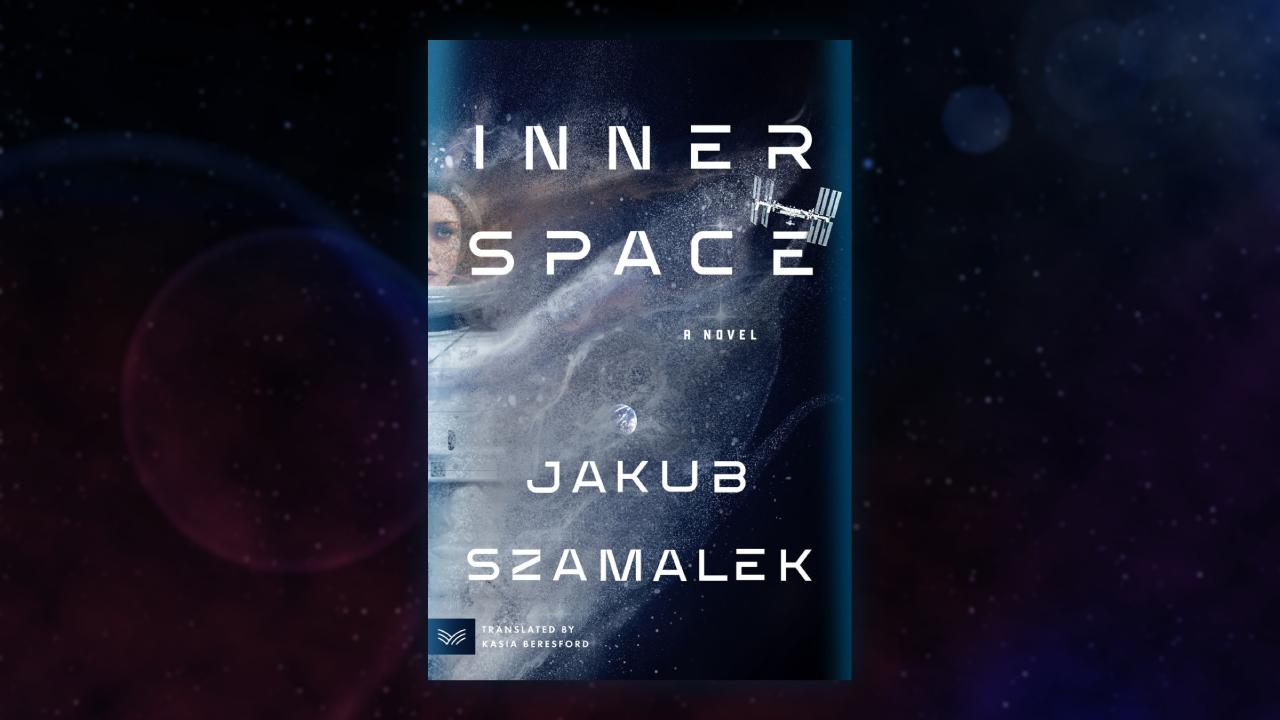
His latest book, Inner Space, is a technothriller set on the International Space Station, and we got the chance to ask him a few questions about his writing process, the difference between writing video games and novels, and the future of single-player narrative-driven games. Here’s what he had to say!
As someone who has written for both books and video games, what excites you most about each medium?
Szamalek: When it comes to books, I love the complete freedom, lack of any restraints. I don’t have to worry about technical limitations or budget issues – sky’s the limit! Whatever I imagine works.
With games – it’s the opposite, you have to be mindful of so many factors. Will animators be able to handle another request? Can we afford additional dialogue lines? But crafting video game stories is also deeply satisfying and rewarding. This is – still! – such a new medium that there’s plenty of room for creativity and experimentation. With each title, I feel that I’m blazing new trails, rather than following in someone else’s footsteps.
And, as an extension of that, is there anything you wish you could borrow from one medium and bring into the other?
Szamalek: Ah, sure! What I love the most about writing for video games is the tension which arises from choices. Rather than follow the story passively, players need to make a decision and accept responsibility for its consequences. It’d be great to recreate it in linear media!
On the other hand, when writing books, I can smoothly transition from describing objective reality (set the stage, describe what characters look like, do, and see) to people’s innermost feelings and thoughts. It’s much harder to do in a video game setting.
How does your approach to writing characters change between video games and novels?
Szamalek: The biggest difference lies in the relationship between the protagonist and your audience. In a video game, they need to be closely aligned – gamers need to be able to relate to their characters’ motivations and goals; otherwise, they wouldn’t feel motivated enough to put in the effort to unfold the story. When it comes to books, on the other hand, readers are perfectly fine following a character they don’t understand – or don’t like – as long as it’s interesting enough.
Writing a novel is often a solitary experience, while developing AAA RPGs like Cyberpunk 2077 or The Witcher 3 is often a team effort. What are the biggest creative benefits you’ve found in working alone versus with a team?
Szamalek: The biggest challenge of working alone is the pressure of responsibility – there’s no one to hold accountable other than yourself. The upside, though, there’s no one to stop you from writing what you want to write about. Well, not until you hand the book over to your editor, that is…
Writing is a balancing act of world-building, dialogue, introspection, and emotional tone. How do you ride that line?
Szamalek: There’s a saying that you can tell a well-written sentence when you can’t subtract a word from it without damaging it. I think it’s very true and that’s the standard I’m trying to meet in my writing: to give the reader just enough to enable them to visualize whatever’s going on.
There’s been a lot of debate about the future of single-player narrative-driven games. Based on your experience and what you’re working on now with The Blood of Dawnwalker, where do you see the genre heading in the next few years?
Szamalek: I’m not too worried. I believe there’ll always be an audience for meaningful, well-crafted single-player stories. The recent success of titles such as Baldur’s Gate III and Clair Obscur shows that beyond doubt. We’re very excited about The Blood of Dawnwalker – and can’t wait until we get to share it with gamers.
In your upcoming novel, Inner Space, much of the story unfolds on the International Space Station, which is a stark contrast to the vast open worlds of your game work. Was it a creative challenge to set a story in such a confined space?
Szamalek: Yes, it was an interesting challenge to tackle! Characters have nowhere to run, nowhere to hide, they keep moving in circles inside the same space. I thought the best way to deal with it is to lean into it: use it to create the feeling of tension, of danger. My goal was to communicate some of this discomfort to the reader, to make them feel the walls closing in.
A major theme of the book is our draw toward space itself. On a personal level, what draws your eyes starward? Is it the mystery, the pursuit of knowledge, the search for meaning, or just that it’s a compelling place to set a story?
Szamalek: To be honest, I’m more fascinated by our fascination with space than the stars themselves. When I read about the ISS – how staggeringly expensive it was, how much effort it continuously demands, how many hoops astronauts have to jump through to even have a shot at going there – I kept asking myself: why? Why do we bother?
In the book, there is a lot of detail put into describing the International Space Station and life onboard. How much did you dive into the real dynamics and design of the ISS to build authenticity in Inner Space?
Szamalek: I did my best to describe the ISS as faithfully as possible. I read pages upon pages of technical documentation, I watched hours of videos showing its nooks and crannies.
Were there any details you learned during your research that genuinely surprised or unsettled you?
Szamalek: I guess the thing that surprised me most was just how awfully loud it is – constant humming and buzzing, all the time. I’m impressed the astronauts can put up with it – I know it’d drive me crazy.
You describe the ISS as a symbol of a dying dream, the idea that former adversaries can work together for the common good. Do you think the fall of that dream is a reflection of human nature, or just the failure of specific systems and institutions?
Szamalek: Ah, wish I knew. I fervently hope that the optimism of the 90s wasn’t just naivete – that we can, after all, work together for the greater good. But looking around these days, it’s hard to see how we’d get there. Even though the ISS won’t last forever, it’ll still remain proof that collaboration between former foes is possible – and as such, it’s tremendously important. To me, the fact that it was built – and remained in operation for so many years, despite all the geopolitical tensions – is more significant and awe-inspiring than all the scientific research that happened there.
That’s it for the interview. Thank you to Jakub Szamalek for talking to us about the book and answering our questions. Inner Space is releasing on July 15. The book was originally released in Poland and is now getting a wide release in English. We did get an early copy of the book to read, and you can listen to Sri’s thoughts on it by checking out The Respawn Station Podcast next week. For more exclusive interviews, click here to read about the NPC Affection System in Starsand Island.
